Recycling and Sustainability at Tree Surgeons Staines
 At Tree Surgeons Staines, sustainability is built into everyday arboricultural work. From pruning and crown reductions to tree removals and site clearances, we look for practical ways to reduce waste, reuse materials, and support responsible disposal. Our approach to tree surgeon recycling in Staines is shaped by the same principle that guides much of the local area: keep useful resources in circulation for as long as possible and separate waste streams carefully so they can be processed correctly.
We set a clear recycling percentage target for the green waste we handle, aiming to recycle or recover at least 95% of suitable arboricultural material whenever conditions and material quality allow. That target includes timber, brushwood, chippings, and clean organic waste that can be processed into mulch, biomass feedstock, or soil improvement materials. Anything that cannot be safely repurposed is sorted for compliant disposal, with a focus on minimising landfill use.
 Our work across Staines, Egham, Ashford, and the wider borough area often involves careful sorting on-site before materials leave the job. This mirrors the way local boroughs encourage waste separation, with different containers and routes for green waste, timber, metals, and general rubbish. For a Staines tree surgery service, that means less contamination in the waste stream and better outcomes for recycling facilities. In practical terms, a clean load of woodchip or logs has much more value than mixed debris, so we keep separation high from the start.
Local Transfer Stations and Responsible Processing
One important part of our sustainability plan is using local transfer stations and licensed green waste processors wherever possible. Keeping material local reduces mileage, cuts emissions, and supports the circular economy in Surrey and neighbouring boroughs. Rather than transporting every load long distances, our teams route recyclable arboricultural material through facilities that can grade and process it efficiently. This helps ensure the right material ends up in the right place, whether that means composting, biomass recovery, or timber recycling.
We also favour local handling routes for wood arising from tree dismantling and stump work. Clean timber can be chipped, screened, or used in biomass streams, while suitable brash can be turned into mulch for landscape use. In areas where councils place emphasis on separated organic waste, our tree surgery recycling methods align well with those expectations. That attention to separation also helps reduce contamination from non-organic items such as plastic ties, twine, soil bags, and mixed household waste.
When access or site conditions make it necessary, we still maintain the same environmental standards. Even a smaller Staines arborist job can generate a meaningful volume of green material, so every load is checked and classified before it leaves the site. This disciplined process supports compliance and avoids unnecessary re-handling later. It also means that our recycling figures are based on real material recovery, not broad assumptions.
Charity Partnerships and Reuse
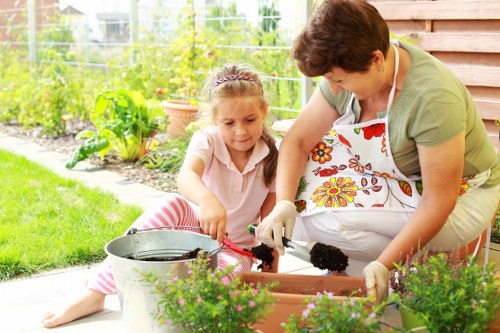 Not every item from a tree work project needs to become waste. We look for opportunities to work with charities, community groups, and local projects that can make use of suitable timber, logs, or woodchip. Well-graded logs can sometimes support community wood fuel schemes, while untreated timber may be useful for habitat features, garden projects, or educational landscaping. Where safe and lawful, this kind of reuse extends the life of the material and gives it a new purpose.
We are especially mindful of reuse in a town like Staines, where local environmental efforts often depend on practical, small-scale collaboration. A branch stack that is too irregular for one stream may still be valuable elsewhere after processing. In this way, tree surgery in Staines can contribute to local causes without adding complexity for clients. Our team looks for sensible matches between recovered material and organisations that can benefit from it, with safety and quality always coming first.
We also recognise that charity partnerships are not just about disposal; they are about resource stewardship. A tree surgeon’s role can include identifying what has value before anything is taken away. Whether that means logs destined for community firewood, chip for planting beds, or reusable wood for local makers, the aim is the same: reduce waste and support a more sustainable local economy. It is a small but meaningful part of our wider commitment to environmentally responsible tree care.
Low-Carbon Vans and Cleaner Operations
Low-carbon vans are another key part of how we reduce our footprint. Our fleet strategy focuses on efficient vehicles, reduced idling, smarter routing, and regular maintenance to improve fuel economy and lower emissions. For a service that often moves equipment between multiple sites each day, vehicle choice matters. Better planning means fewer unnecessary journeys, less congestion-related fuel burn, and lower overall carbon output from the day-to-day operation of the business.
We are gradually increasing the share of lower-emission vehicles in our fleet where practical, and we use route planning to group jobs by location whenever possible. That matters across the Staines area, where busy roads and mixed residential-commercial access can make short trips surprisingly inefficient. By combining jobs, choosing the most direct routes, and reducing repeated visits, we support a greener Staines tree care service without compromising reliability.
 Sustainability also extends to how equipment is carried and used. We favour compact, well-organised loading that avoids excess trips and reduces wasted space. Smaller operational changes add up: switching off engines when waiting, maintaining tyre pressure, and using tools responsibly all help reduce carbon intensity. These are simple habits, but together they make our tree surgeon Staines operations more efficient and environmentally aware.
Waste Separation, Recycling Routes, and Ongoing Improvement
 Our recycling and sustainability work is not a one-off policy; it is an ongoing process of improvement. We review waste handling, investigate new recycling routes, and adapt to local opportunities for separation and recovery. In boroughs that encourage household and business waste segregation, our working methods fit naturally with wider environmental goals. That includes separating green waste from inert material, keeping clean timber apart from contaminated loads, and ensuring recyclable items are not mixed with general refuse.
For customers, this means a Tree Surgeons Staines service that treats sustainability as standard practice rather than an extra. From the first cut to the final load-out, we aim to keep materials in use, reduce emissions, and support responsible recovery. Whether the job is a routine reduction, a large dismantle, or a site clear-up, our recycling approach is designed to be practical, local, and environmentally sensible.
By combining a high recycling target, local transfer station use, charity partnerships, and low-carbon vans, we are working toward a tree surgery model that is both efficient and responsible. The result is a service that respects the landscape we work in and helps protect it for the future.