Crown Thinning in Staines
If you are looking for crown thinning in Staines, you are probably dealing with a tree that has become too dense, too heavy, or too restrictive for the space it sits in. In a town like Staines-upon-Thames, where properties range from older homes with established gardens to modern estates, riverside plots, town centre businesses, and compact residential streets, the right tree work can make a huge difference to safety, light, and day-to-day usability. Crown thinning is one of the most effective ways to improve a tree without changing its natural shape more than necessary.
This service is often chosen by homeowners who want more sunlight in the garden, by landlords managing mature trees near parking areas, and by commercial property owners who need to reduce wind resistance or improve clearance around buildings and walkways. It is a careful, selective pruning method designed to remove a portion of smaller branches throughout the crown, helping the tree remain healthy while becoming less congested.
For customers in Staines, the appeal is simple: a well-thinned crown can feel lighter, safer, and more manageable while still keeping the tree looking attractive. Whether the tree stands near a driveway in Laleham, a family garden in Staines town centre, or a commercial site close to the A308, crown thinning can be tailored to the tree species, its condition, and the needs of the property.
What crown thinning involves
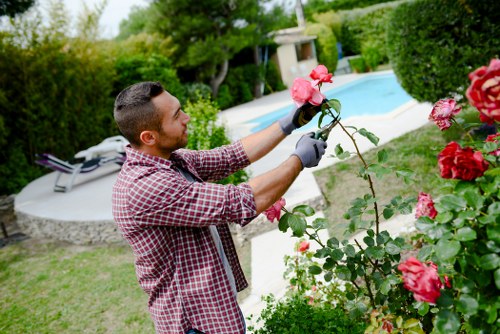
Crown thinning is the selective removal of smaller branches from inside the canopy and around the outer sections of the crown. The aim is not to “top” the tree or strip it back harshly, but to reduce density in a thoughtful way. A trained arborist looks for overcrowded areas, crossing shoots, weak attachments, rubbing limbs, and branches that create unnecessary weight or restrict air movement.
This work is different from crown reduction and crown lifting. Crown thinning keeps the overall height and shape broadly intact, while reducing the thickness of the canopy. That means the tree can still provide character, privacy, and habitat value, but with less drag in high winds and more light filtering through to the ground below.
In practical terms, crown thinning in Staines is often requested for trees that have become too dominant over gardens, patios, offices, shop fronts, car parks, or shared access routes. It is a popular choice for species that naturally produce dense growth and can benefit from a more open canopy.
Why local property owners choose crown thinning
Staines has a mix of property styles and outdoor spaces, and that variety means tree care needs can be quite different from one site to the next. A tree in a compact rear garden may need more light penetration for planting beds and lawn recovery, while a tree on a wider boundary may need better wind flow and branch spacing to reduce strain during bad weather.
For many local customers, crown thinning is about solving a few common issues at once:
- Reducing shade over lawns, seating areas, and windows
- Helping gardens feel brighter and more usable
- Lowering wind resistance in exposed positions
- Improving clearance above paths, driveways, and parking spaces
- Reducing branch congestion around roofs, wires, and nearby structures
Because the work is selective, it tends to suit people who want a balanced result rather than a dramatic change. That is especially useful in streets where mature trees form part of the character of the neighbourhood, or where nearby trees must be managed carefully to maintain good relations with neighbours and shared boundaries.
How crown thinning benefits trees and people
Improved light and air movement
One of the biggest reasons people ask for crown thinning in Staines is simple: they want more light. Dense crowns can cast heavy shade across gardens, patios, conservatories, and ground-floor rooms. By reducing excess growth, more daylight is able to pass through the canopy, which can make a garden feel noticeably more open.
Better airflow is another practical benefit. A thinner crown allows wind to move through the tree more freely, which can reduce the physical stress placed on limbs during strong weather. This can be particularly helpful on exposed roads, in open parkside settings, or where trees stand near large open spaces such as commercial forecourts and shared grounds.
Healthier branching structure
When done properly, crown thinning supports the tree’s long-term structure. Removing selected branches can reduce rubbing and overcrowding, which may lower the chance of weak points developing. It also helps distribute the crown more evenly, reducing localised weight where branches have grown too close together.
Better overall appearance
A professionally thinned crown usually looks cleaner and more balanced. Rather than appearing hacked back, the tree retains a natural outline but with a lighter, airier feel. This matters for front gardens, visible boundary trees, and business premises where presentation is important.
Where crown thinning is commonly needed in Staines
Staines includes a broad range of residential and commercial settings, and each location brings its own tree management challenges. Mature garden trees in older residential streets may need regular attention because they have had time to build dense canopies. Newer developments may have smaller plots where trees quickly feel oversized. Riverside properties can be more exposed to wind, making branch density a real consideration.
Commercial customers also benefit from this service. Office parks, retail yards, schools, hospitality venues, and managed communal spaces often need trees to look presentable while remaining safe and practical for daily use. Dense crowns can obscure signage, reduce natural light at entrances, or create unnecessary debris in walkways and parking areas.
Local knowledge helps here. A team that regularly works in and around Staines understands the access issues that can arise on narrow streets, shared drives, and properties with limited parking. That makes planning, equipment choice, and clean-up much smoother from start to finish.
What is included in a crown thinning service
Typical service features
When you book crown thinning in Staines, you should expect a careful and planned approach. The exact work will depend on the tree species, its size, its condition, and your goals for the site, but a good service normally includes the following:
- Assessment of the tree’s condition, shape, and branch structure
- Selective removal of small to medium branches within the crown
- Attention to crossing, crowded, weak, or poorly positioned growth
- Work designed to preserve the tree’s natural appearance
- Removal of arisings and a tidy finish where agreed
- Advice on whether future maintenance may be beneficial
Depending on the situation, an arborist may recommend combining thinning with other light pruning tasks. For example, a tree near a roofline might need a small amount of clearance in addition to thinning, or a tree overhanging a boundary might require selective branch management to improve access and reduce nuisance.
Every tree is different
There is no one-size-fits-all method. A healthy beech, a mature oak, a conifer screen, and a flowering ornamental tree all respond differently. The aim is always to work with the tree’s biology and structure rather than forcing it into a shape that causes stress later on.
How the process usually works
Customers often want to know what happens on the day. While every site is slightly different, the process is usually straightforward and customer-friendly. A local tree team will normally begin by inspecting the tree and discussing what you want to achieve. This might be more daylight, less wind pressure, better clearance, or a tidier overall look.
Once the work is agreed, the arborist will identify which branches should be removed and which should remain to maintain balance. The cuts are made carefully so that the crown is thinned evenly, not left patchy or unbalanced. Good thinning is subtle; the tree should still look like itself, just with less congestion.
At the end of the job, the area should be left neat and safe. That may include clearing branches, chippings, and debris depending on the service arrangement. If the tree has been particularly dense, the improvement in light and openness can often be seen immediately.
Preparation checklist before your appointment
How to get ready
A little preparation can make the work smoother and faster. If you are arranging crown thinning in Staines for a domestic or commercial site, the following checklist is a sensible place to start:
- Make sure the tree area is accessible on the day
- Move cars, bins, garden furniture, and fragile items if possible
- Unlock side access gates if contractors need to reach the rear garden
- Tell the team about buried cables, ponds, sheds, or delicate planting nearby
- Let neighbours know if branches overhang a boundary or shared area
- Check whether any parking restrictions, access codes, or timing limits apply
In parts of Staines where parking is tight or driveways are shared, access planning matters. Narrow routes, residents’ parking, and limited turning space can affect how equipment is brought in and how waste is removed. A local team is more likely to plan around these practical details before the work begins.
Good preparation saves time and reduces disruption. It also helps the arborist focus on precise cutting rather than dealing with avoidable obstacles around the site.
Pricing factors for crown thinning
Many customers want to understand what influences the cost of crown thinning, even when they are not looking for an exact figure in advance. The price is usually shaped by the size of the tree, the amount of work required, how accessible the site is, and whether any additional services are needed.
Factors that can affect the quote include:
- Tree height, canopy spread, and overall density
- Species and growth habit
- Condition of the tree and any signs of decay or weakness
- How easy it is to reach the tree with equipment
- Proximity to buildings, fences, roads, and overhead obstacles
- Whether waste removal and site clearance are included
- Any need for traffic-sensitive or restricted-access planning
In Staines, access can play a major role. A tree at the back of a terrace property with limited alleyway access is a different job from a tree in a spacious frontage with direct vehicle access. Likewise, work near busy commercial entrances or shared residential courtyards may take more coordination than a straightforward garden task.
If you are comparing options, it is sensible to ask what is included in the service rather than focusing on price alone. A thorough, well-managed job usually provides better long-term value than an overly rushed cut that needs correcting later.
Why choose a local company for crown thinning in Staines
Local knowledge matters
Choosing a local tree care team has real practical benefits. Staines has a mix of older tree stock, newer landscaping, riverside exposure, and everyday residential access challenges. A local crew is more likely to understand the types of trees common in the area, how local properties are laid out, and the best way to carry out work with minimal disruption.
That knowledge is valuable in several ways. It can help with planning around shared access points, protecting neighbours’ boundaries, and working efficiently on streets where parking is limited. It also helps when advising on the right balance between thinning, reduction, and general maintenance.
Local customers often want more than just a quick cut. They want reassurance that the tree will be treated properly, that the site will be respected, and that the result will suit both the property and the surrounding area. A local service is typically better placed to provide that level of attention.
Residential and commercial needs
Whether you manage a family home, a rental property, a block of flats, or a commercial site, crown thinning can be adapted to your setting. Residential customers usually want more light, better views, and improved garden usability. Commercial customers often care about safety, presentation, access, and keeping external spaces tidy for staff, customers, or visitors.
Areas covered around Staines
Tree work requests can come from many parts of and around Staines, especially where mature planting has outgrown its original space. Crown thinning may be useful in nearby residential and mixed-use areas such as Laleham, Ashford, Egham, Hythe, Wraysbury, and surrounding local neighbourhoods. If your property sits close to busy roads, riverside paths, communal parking areas, or neighbouring gardens, careful tree management is often even more important.
Different parts of the local area present different conditions. Some sites are open and windy; others are sheltered and prone to heavy shade. Some have generous access, while others require hand tool work, careful waste handling, and close attention to neighbouring property boundaries. That is why a local approach is so helpful: the service can be adapted to the site, not forced into a rigid format.
If you are unsure whether your tree is suitable for thinning, a site assessment is the best starting point. It can help identify whether the tree would benefit from this method or whether another form of pruning would be more appropriate.
When crown thinning is a good choice
Common reasons customers ask for it
Crown thinning is often the right option when a tree is healthy enough to keep, but the canopy has become too compact or heavy. It is especially useful if you want a noticeable improvement without a drastic change to the height or outline.
It may be a good choice if:
- The tree blocks too much natural light
- Branches are congested and rubbing together
- The canopy catches too much wind
- You want a safer feel around a driveway or path
- The tree looks overgrown but you still want to keep its natural form
- You need better balance between privacy and openness
It is often chosen for mature boundary trees, garden feature trees, and specimen trees in visible frontages. In many cases, it offers the best compromise between preserving the tree and improving the day-to-day use of the property.
Signs your tree may be too dense
Some trees clearly need attention, while others simply feel “too full” without obvious damage. If you are unsure whether crown thinning would help, there are several common signs to look for. Dense crowns often create heavy shade underneath, leaving lawns patchy and planting beds struggling. They may also hold moisture for longer, which can affect the feel of a garden and make it less pleasant to use after wet weather.
Other signs include:
- Limited air movement through the canopy
- Rubbing or crossing branches
- Clumps of growth that make the tree look uneven
- Branches pressing into roofs, walls, fences, or neighbouring spaces
- Wind noise or movement that feels excessive in exposed conditions
If these issues sound familiar, a professional assessment can help you decide whether thinning is the best option. Sometimes a tree just needs a lighter, more balanced structure to perform better in its setting.
Frequently asked questions
Will crown thinning harm my tree?
When carried out correctly, crown thinning should not harm a healthy tree. It is a selective pruning method designed to improve structure and reduce congestion. The key is moderation and proper technique.
How much of the crown should be removed?
That depends on the species, condition, and purpose of the work. A skilled arborist will remove only enough to achieve the desired result without over-thinning the canopy or stressing the tree.
Is crown thinning suitable for every tree?
No. Some trees respond very well, while others may need a different approach. A professional assessment is important, especially if the tree is young, stressed, protected, or showing signs of disease.
Will it make my garden much brighter?
Usually, yes. The amount of improvement depends on how dense the tree was to begin with and how much selective pruning is appropriate. Many customers notice a real difference in daylight and openness after the work is completed.
Can crown thinning be done near houses and boundaries?
Yes, as long as access and safety are properly managed. In Staines, many jobs involve trees close to fences, garages, extensions, and shared boundary lines. This is where a careful, experienced team is especially valuable.
Do I need to be at home during the work?
That depends on the site and the arrangements made beforehand. Many customers prefer to be available at the start so any access details or priorities can be confirmed, but the practical setup can vary by property.
Why it is worth booking a professional service
Tree pruning may look straightforward from the outside, but crown thinning is a skilled job. It requires an understanding of tree growth, branch load, spacing, and long-term impact. Cutting too much, cutting the wrong branches, or thinning unevenly can leave the tree looking unbalanced or create problems later on.
A professional service gives you the benefit of judgement as well as technique. The goal is not simply to remove branches, but to make the tree work better for the site. For local customers in Staines, that can mean more light, less clutter, better wind performance, and a smarter finish that suits both the property and the surroundings.
If you want a tree that looks healthier, feels lighter, and is easier to live with, crown thinning may be the right solution. It is a practical investment in both the tree and the space around it.
Book crown thinning in Staines today
Whether you are maintaining a mature garden tree, improving a commercial frontage, or reducing shade over a home in a tight residential street, crown thinning can provide a sensible and attractive result. It is especially useful when you want to keep the tree but make it easier to live with.
From first assessment through to careful pruning and tidy completion, a local service should make the process straightforward and respectful of your property. If you are ready to improve light, airflow, and the overall balance of your tree, contact us today to discuss your needs and request a free quote.
Book your service now if your tree in Staines is becoming too dense, too heavy, or simply too dominant for the space it occupies. A well-executed crown thinning service can make a noticeable difference to everyday comfort and kerb appeal.